




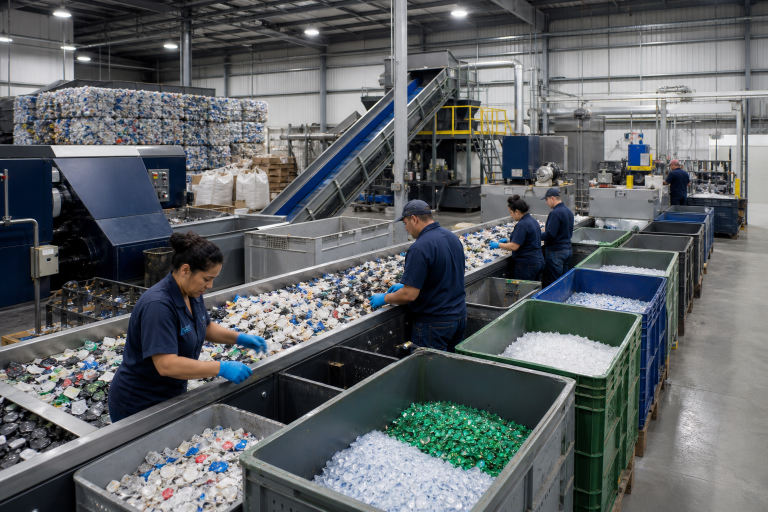
Manufacturers can treat production scrap as a recoverable material rather than an unavoidable disposal cost. A cleaner stream begins with knowing what is generated, keeping different plastics apart, and preventing contaminants from entering collection containers. Well-organized plastic recycling programs can make it easier to prepare material for reuse, processing, or sale.
Improvement does not always require an immediate equipment purchase. Clear work instructions, labeled containers, dry storage, and regular measurement can reduce avoidable mixing and help a facility understand which material streams offer the strongest recovery potential.
Why Plastic Stream Quality Matters
Clean, consistent scrap is easier to handle and offers more potential end uses than a mixed load with unknown contamination. This matters because plastic recovery remains limited relative to the amount generated. The EPA’s plastic materials data shows that plastics represented a major share of municipal solid waste, while only a comparatively small portion was recycled. Industrial generators can improve outcomes by controlling material quality before it leaves the facility.
Start With a Waste Stream Audit
Before changing collection practices, map the current flow of scrap. List every plastic produced during trimming, molding, packaging, assembly, shipping, or maintenance. Record approximate weekly or monthly weights, identify where the material leaves the process, and note where contamination begins. Also, document how each stream is stored, moved, and currently discarded or recovered.
Facilities managing recurring production scrap may find that industrial plastics recycling works best when batches are documented by resin, form, color, and source rather than combined into a single catch-all load.
Separate Plastic by Resin Type
Plastic is not one uniform material. Different polymers melt, flow, and perform differently, so combining them can weaken recycled material or limit processing options. Resin identification codes may help with basic recognition, but production records and supplier specifications are often more reliable for industrial scrap.
- PET: Common in bottles, containers, and some textile-related materials.
- HDPE: Used in containers, pipes, crates, and durable goods.
- LDPE: Often found in film, liners, and flexible packaging.
- PP: Used for caps, tubs, automotive parts, and molded components.
- PC, PC/ABS, TPO, and TPE: Common in technical, flexible, or impact-resistant parts.
Control Contamination at the Source
A small amount of the wrong material can affect a much larger batch. Common problems include metal fasteners, paper labels, cardboard, tape, adhesives, oil, grease, chemical residue, dust, water, food waste, painted surfaces, and incompatible polymers. Identify which contaminants are most likely at each workstation, then create a simple rule for keeping them out.
Improve Collection and Storage
Place dedicated containers near the machine, work cell, or loading area where scrap is created. Clear labels, color coding, floor signs, and sample photos reduce guesswork. For example, a plant might use separate containers for clear PET, natural HDPE, colored PP, and mixed engineering plastics. Simple visual controls are often more dependable than long written procedures.
Storage should protect plastic from weather, dirt, and moisture. Use covered areas, clean containers, dry floors, and first-in, first-out rotation when material remains onsite for extended periods. Each batch should be labeled with the material name, resin type, date, source area, and estimated weight.
Choose the Right Processing Route
The appropriate route depends on the resin, cleanliness, volume, size, and planned end use. Sorting separates material by resin, color, size, or form. Grinding and shredding reduce larger pieces into manageable sizes. Washing may remove surface residue, although it also adds water, drying, and handling requirements. Pelletizing can create a more uniform feedstock for some manufacturing applications.
Mechanical recycling remains useful for clean, well-characterized material. Advanced chemical or thermal processes may help manage certain difficult streams, but they have different feedstock requirements and should be evaluated alongside, rather than automatically instead of, mechanical options.
Build Specifications and Track Results
Create a short specification sheet for each recurring stream. Include resin type or blend, color, form, expected moisture, known fillers or coatings, acceptable contamination limits, typical batch weight, packaging requirements, and intended processing route. This gives production teams, transport providers, and processors the same starting expectations.
Measure performance monthly. Useful indicators include plastic waste per production unit, percentage sorted correctly at the source, rejected-load rate, contamination causes, shipment weight, processing cost, and the share of material that returns to manufacturing use. These measurements show whether changes are actually improving quality.
Prepare for Market Changes and Train Employees
Recycled resin markets can shift with demand, virgin resin pricing, imports, policy changes, and processing capacity. Recent reporting on the domestic post-consumer recycled plastic market illustrates why manufacturers should avoid relying on one buyer, one outlet, or one pricing assumption. Better documentation and consistent quality can support flexibility when markets change.
Training should be short and practical. Show workers examples of approved and rejected material, post instructions at collection points, use photos for uncommon blends, review mistakes during team meetings, and update rules whenever suppliers or production processes change.
Common Questions About Cleaner Streams
Can mixed plastics be recycled?
Some mixed plastics can be processed, but separation usually improves consistency, value, and possible end uses. Results depend on the polymers, additives, contamination level, and available processing method.
Is clean plastic scrap always valuable?
Cleanliness helps, but value also depends on resin type, color, volume, local demand, transportation cost, and processing capacity.
Should every stream be washed?
No. Washing may be unnecessary for clean production scrap and can add cost, water use, and drying time. Evaluate contamination before adding the step.
A Practical 30-Day Action Plan
- Days 1 to 5: Map every collection point and material stream.
- Days 6 to 10: Confirm resin types, colors, forms, and contamination risks.
- Days 11 to 15: Add labels, dedicated containers, and storage rules.
- Days 16 to 20: Train employees and begin batch tracking.
- Days 21 to 30: Review rejected material, identify causes, and set improvement goals.
Conclusion
A cleaner plastic recycling stream is built through disciplined sorting, protected storage, practical specifications, and reliable data. Starting with the largest recurring streams can reveal quick improvements while creating a stronger foundation for longer-term material recovery decisions.
READ ALSO: Why Office Renovations Require Complete Commercial Glass Replacement